Syrinx Music
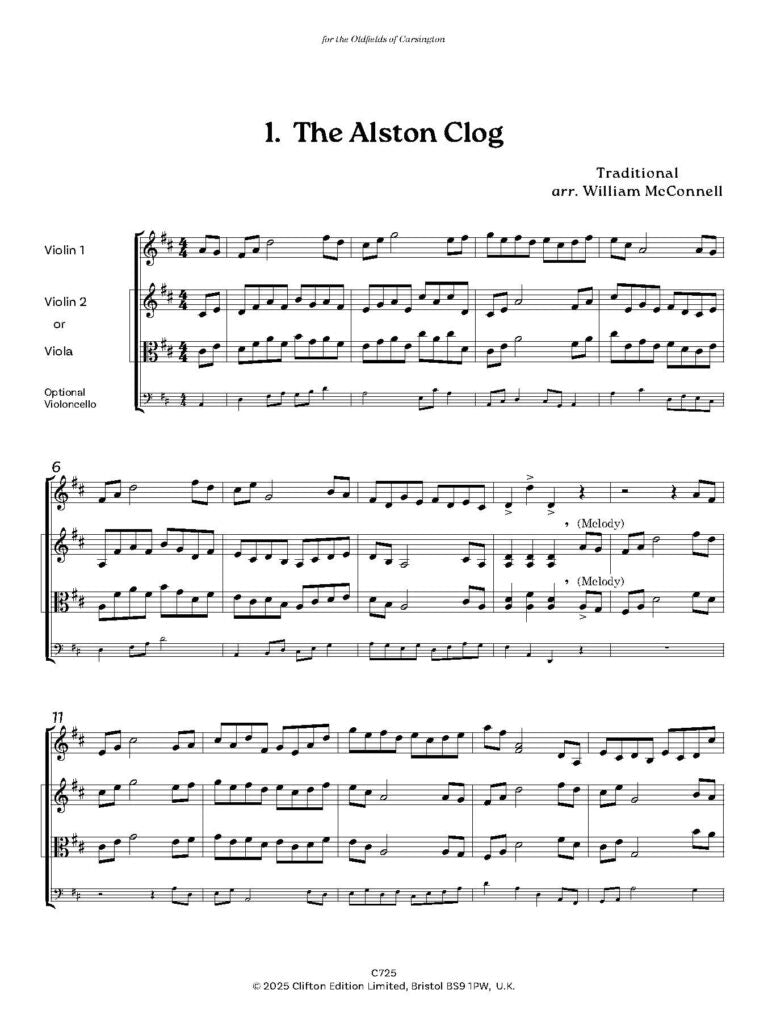
McConnell, William: The Rhythm of the Mills Clog Dances from the Lancashire Cotton Mills: Violin Duet or Violin & Viola Duet - Digital Download
McConnell, William: The Rhythm of the Mills Clog Dances from the Lancashire Cotton Mills: Violin Duet or Violin & Viola Duet - Digital Download
Couldn't load pickup availability
Clog dancing originated in the North of England over 200 years ago. It is thought to have developed in the Lancashire Cotton Mills where wooden-soled clogs were preferred to leather soles because the floors were kept wet to help keep the humidity high, an important feature in cotton spinning, as the nails in leather soles could cause sparks, which could result in the risk of explosion.
The Clog dance steps were inspired by the rhythmic sounds of the textile machinery, and it is said to have first been danced by girls working in the cotton mills. They would beat out a rhythm with their wooden clogs to keep in time with the shuttle flying backwards and forwards across the loom. They would also sing choruses whilst stepping to the rhythm of their machines.
There were a variety of machines in the many mills of the Midlands and North West, each machine built for a specific function. There were many rhythms, and as the girls clog danced it is said that those watching the dancers could tell which machines they worked at, and from which mill.
Clog dancers were also a common sight, not only at the mill’s lunch breaks, but also at competitions in towns and in Music Halls throughout the 19th and 20th centuries.
William McConnell
Contents
1. The Alston Clog
2. Caynton Mill Polka
3. The Champion Clog
4. The Christmas Clog
5. Clog Hornpipe (Navvy on the Line)
6. The Empress Clog
7. The Fancy Clog
8. Glen’s Clog
9. The Lass O’ Pattie’s Mill
10. Lady Templeton’s Clog
11. Weaver’s Complaint
12 Willenhall Clog Dance
Share